The Characteristics of Kachchhi Pottery

The Kachchh style can be described as earthenware, commonly known as terracotta. While other forms of ceramics are now common, including stoneware (used by studio potters, which vitrifies at 1200 degrees celsius), porcelain (matures between 1300 degrees celsius), and industrial ceramics, most civilizations began by using earthenware.

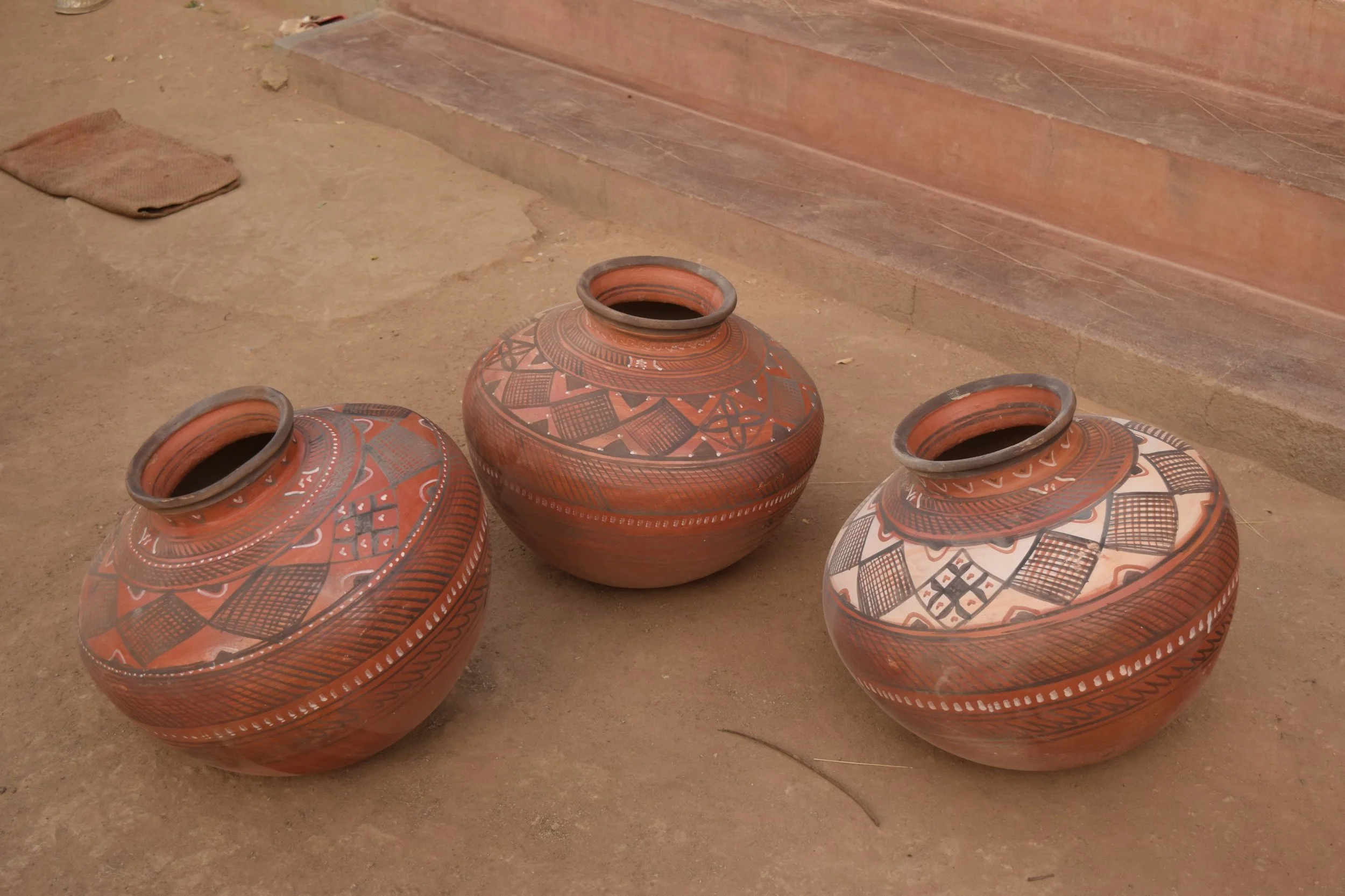
The earthenware clay body matures in the kiln at a temperature range of 800-1050 degrees celsius. Most of the practice of pottery in Kachchh falls under this category. Earthenware in Kachchh is distinct in its use of slips, a watered down clay body with coloring agents added for embellishment. Kachchh Kumbhars use natural red soil (geru) black powdered rock and white clay for this embellishment.
 
DSC_0507.JPG


The forms and shapes of the various Kachchhi products show remarkable variation and uniqueness. They differ according to the user communities and are specific to the function they played within that community. Objects were selected for utility, customs and preferences of aesthetics rather than strict social norms of identity.

The range of clay in Kachchh is mainly red and white. The slips used have been in combinations of red, black and white in stylistic forms that ranged from folk, geometric and floral. The painting style was mainly free flowing with bold strokes. The objects were painted before the firing so they became an integral part of the object with a long durability. Till Kachchh was still a part of the Sindh Province (now in Pakistan), there was some exchange of glazed ceramic ware which was a skill in the Northwestern Frontier connected all the way to Turkey and the Middle East.